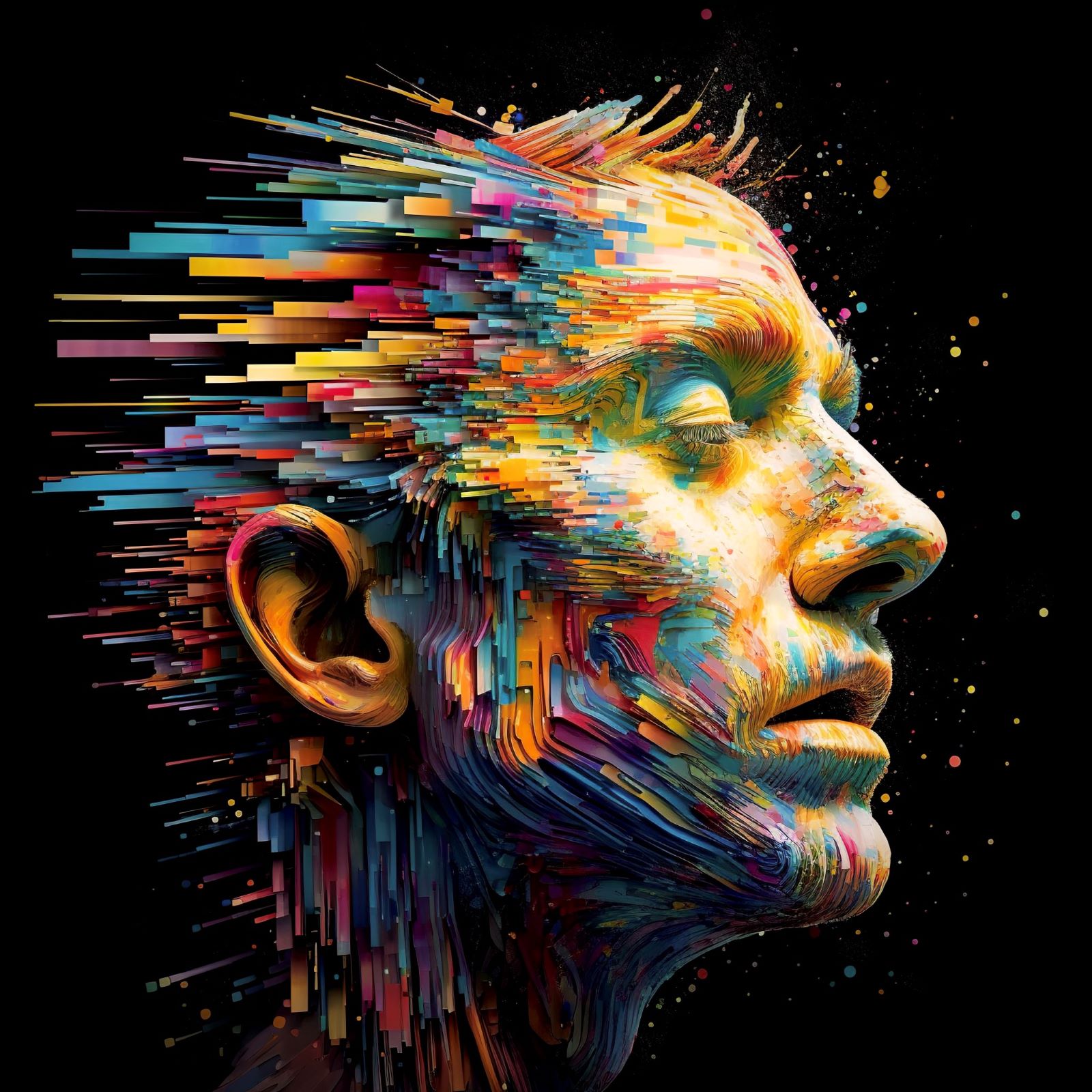
What is data art?
Data art is an artistic practice that uses real data as material. The data can come from networks, measurements, archives, movement, public platforms, scientific systems, or daily life. The artwork remains grounded in the structure of that material, but its purpose is not only explanation. It is also emotion, rhythm, atmosphere, and form.
In that sense, data art is close to data visualization, but it is not the same thing. Visualization usually prioritizes clarity and analysis. Data art keeps the analytical foundation, then asks what the data can become as an image, installation, motion system, or public experience.
Everything is data
We live in a world saturated with data. Movements, conversations, archives, infrastructures, weather, traffic, and habits all leave traces behind them. Data is everywhere, but that does not make it meaningful on its own.
Data can be used to optimize, classify, predict, or explain. Those are important uses, but they are not the only ones. My own ambition has always been slightly different: to use data as a medium for art.
From data viz to data art
Data visualization starts with real-world data and turns it into a readable form. That form can be as simple as a bar chart or as complex as an interactive network. During my Ph.D. at EPFL, I worked in network science and data visualization, so this analytical foundation is central to how I approach the work.
When I create a data artwork, I still begin there. I shape the data, study its structure, and often use computational methods, including machine learning, to scrape, sort, enrich, or transform the material. But then another question appears: what kind of form can carry the message within the data? What shapes, rhythms, and colors can make it felt rather than merely understood?
This is where Data Art distinguishes itself from data visualization. The result remains grounded in real data, rigorously worked on and visible in the final piece, but the objective is no longer only clarity. It is also emotion, energy, and community.
Do algorithms have a soul?
Renaissance painters used egg white to bind pigments on the canvas. In my own practice, data often replaces color as the raw material, but I still need a binding agent. Very often, that binding agent is the network: the hidden structure connecting people, places, systems, and behaviors.
That is why data storytelling is at the heart of what I do. The goal is not simply to prove that data exists. The goal is to make a structure visible, tangible, and memorable.
One of my pieces, On Time, came from the analysis of 42 million pedestrian positions inside the Lausanne train station. In a scientific context, that kind of work can support mobility planning and public infrastructure decisions. In an artistic context, it becomes something else as well: a way of turning human movement into rhythm, density, and form.
AI as an opportunity to explore
Artificial intelligence opens a new field of exploration for artists working with data. It can help classify, enrich, transform, and sometimes generate material. It can reveal hidden patterns, accelerate iterations, and push a visual idea into places that would have taken much longer to reach before.
But AI does not solve the artistic problem.
You cannot buy taste, and you cannot automate it. Taste is judgment. It is knowing what to keep, what to reject, what to emphasize, and when a result is formally interesting but emotionally empty. AI can expand the search space, but it does not replace intention, composition, or sensibility.
That is why I see AI as an opportunity to explore, not as a substitute for artistic vision.
Seeing, smiling, acting
As an avid web user, I have often worked with data from public platforms, archives, and online communities. Some works have circulated widely online, but I have always wanted them to hold their own as images first: evocative forms that remain strong even when the viewer does not know the full dataset behind them.
Over time, the practice evolved from simple geometric compositions on dark backgrounds to neural-network experiments, data fractals, public installations, and other coded forms. The tools change. The ambition does not.
I still want to show that science can be beautiful, both to the eyes and to the mind. And I still believe that the best data art lives in the balance between soul and numbers.
Data art examples
Examples from the studio include Circadian Rhythms, a biometric data artwork for Polar; HPC Data Symphonies, an immersive artwork built from supercomputer activity; The Roots of the E8 Polytope, a mathematical visualization of an eight-dimensional structure; and the Gallery, which archives network artworks, AI studies, fractals, and data-led visual experiments.
For commissioned work, see Data Art & Visualization or the data visualization portfolio.